



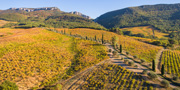


For several years, we have been carrying out an extensive programme of vineyard renewal and restructuring on the hillsides of Gigondas.
Planted in the 1950s, the oldest part of the estate now requires renewal in certain areas to sustainably preserve the quality and balance of the vineyard.
Since 2017, we have gradually undertaken replanting work in small blocks, particularly on some of the highest-altitude parcels within the Gigondas appellation. Located between 470 and 530 metres above sea level, these sites were originally well suited to and planted with Syrah. Today, however, these elevated terroirs also offer particularly promising potential for other grape varieties in the context of modern viticulture and a changing climate.
This gradual approach allows us to maintain the balance of the estate while preparing for the climatic and agronomic challenges of the future.
Les grandes étapes du projet
2017
Project launch
Uprooting of old vines
2024
Planting of 1.63 ha of Cinsault
2025
Planting of 1.13 ha of Syrah
2026
Planting of 3.78 ha of Grenache Noir
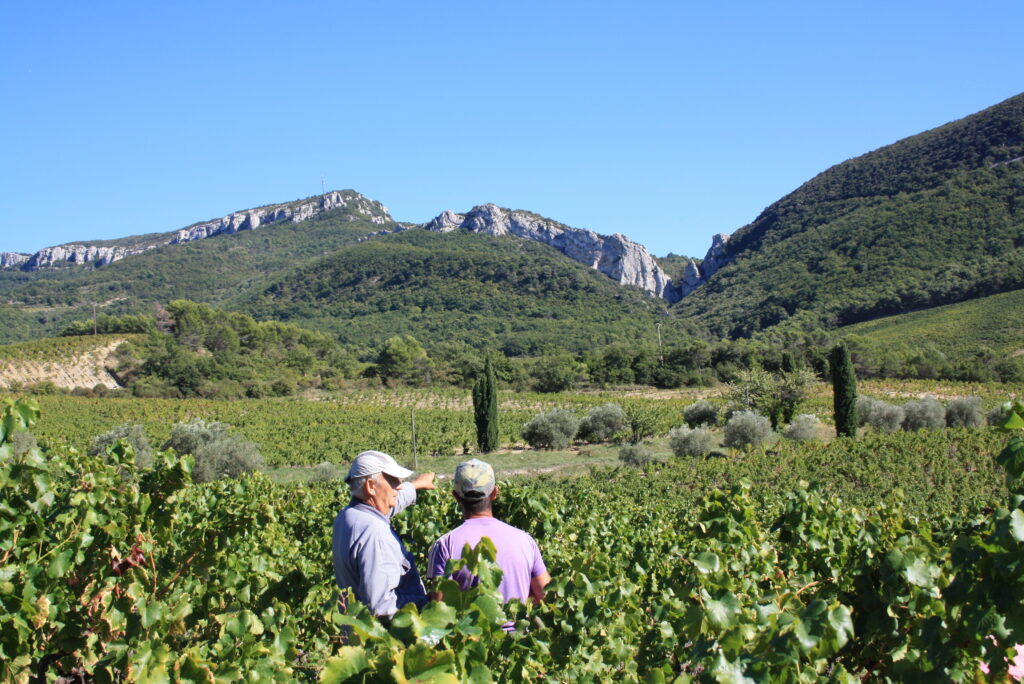
Massal selection to preserve a unique plant heritage
Committed to preserving the identity and uniqueness of our vineyard, we have chosen to work with massal selection for our new plantings.
Rather than purchasing standardised vine material, we select grafting wood directly from the finest vines on the estate. These cuttings are then grafted in order to propagate vines already perfectly adapted to our terroir.
This approach helps preserve the genetic diversity of the vineyard, as well as a particularly valuable heritage of old plant material.
Indeed, our old vines represent an essential asset for the identity of our wines and for their ability to adapt to local climatic conditions.
Cinsault: Preparing the vineyard of tomorrow
In 2024, 1.63 hectares of massal-selection Cinsault were added to the estate’s vineyard, replacing former Syrah parcels. Cinsault offers, in particular, the advantage of strong drought resistance.
Since the new Gigondas appellation decree published in March 2023, Cinsault has been authorised as a complementary grape variety, alongside Syrah and Mourvèdre.
We are proud to take part in this evolution of the appellation, which reflects a collective commitment among winegrowers to prepare for the future while preserving the identity of Gigondas wines.
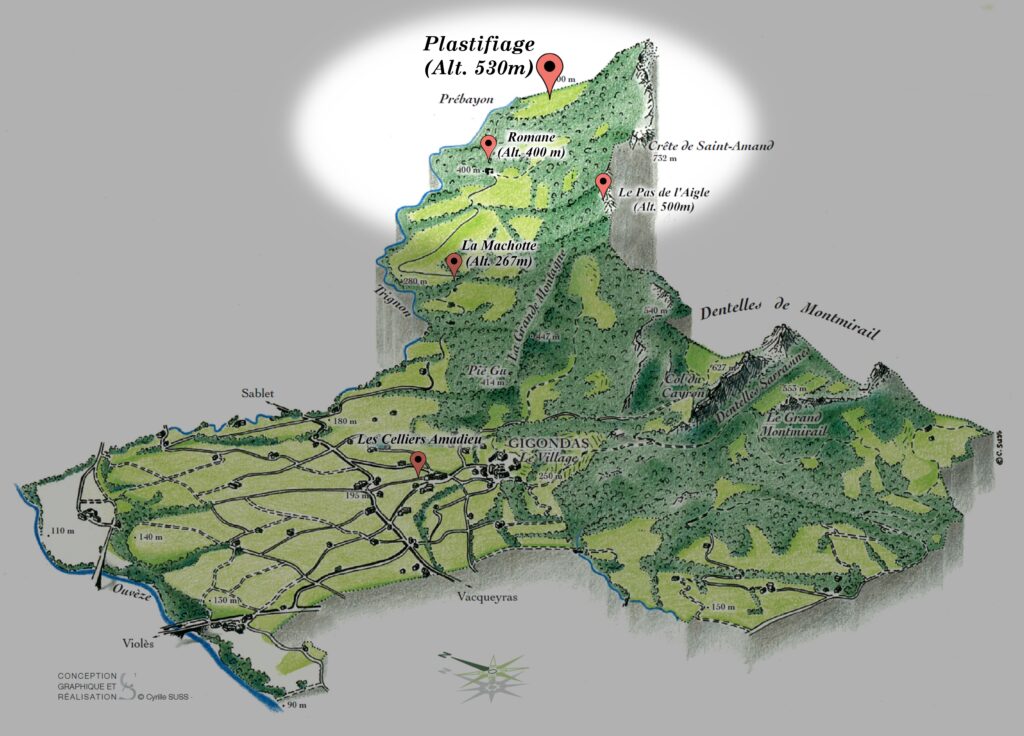
A unique high-altitude terroir in Gigondas
In March 2025, we continued our replanting programme with 1.13 hectares of Syrah. Then, in May 2026, 3.78 hectares of Grenache Noir completed this vineyard restructuring effort within the same sector.
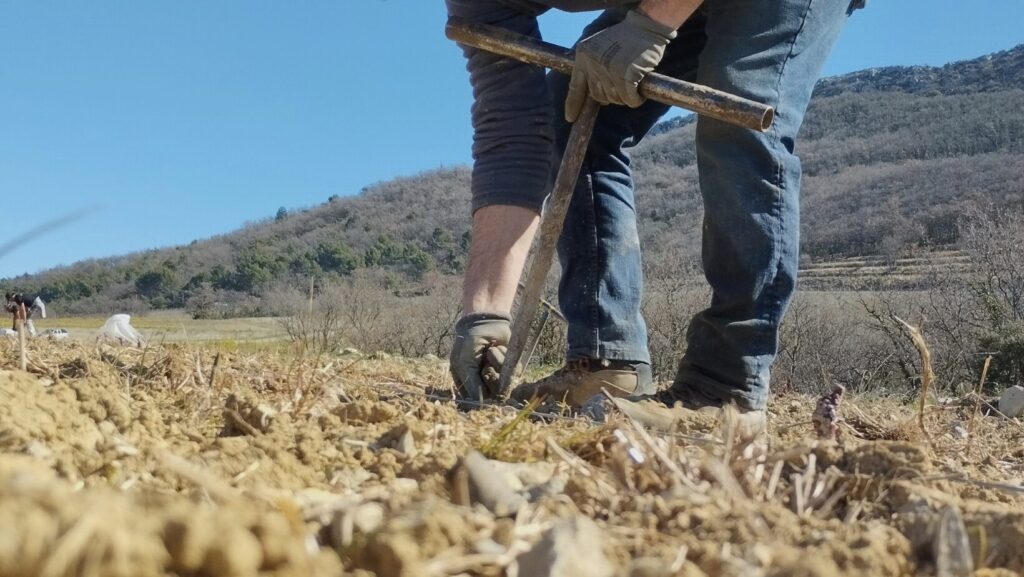
These new plantings are located between 470 and 530 metres above sea level, in the area known as Le Pastifiage, at the far north-eastern edge of Gigondas. These parcels hold particular significance, as they are among the highest in the estate and within the entire Gigondas appellation.
Exposed to the winds and benefiting from a naturally cool environment, they display a highly distinctive geological identity within the appellation. They form a plateau composed of unique sandy marl soils specific to Gigondas.
We believe that this remarkable high-altitude terroir, north-facing and characterised by well-draining limestone soils, offers particularly favourable conditions for expressing the finesse and elegance of these grape varieties. However, it will take several years before its full potential can be fully expressed in the estate’s wines.
Planting a vineyard is always a commitment to the decades ahead.
These new plantings are part of our ongoing commitment to a precise, parcel-by-parcel approach, tailored to each terroir and designed with the long term in mind.
It will still take several years of patience before these young vines can fully express their identity and give birth to the first wines.
Pierre Amadieu